Youth Transition to Coffee Green Skills and Entrepreneurship Opportunities- Y2GEO Project
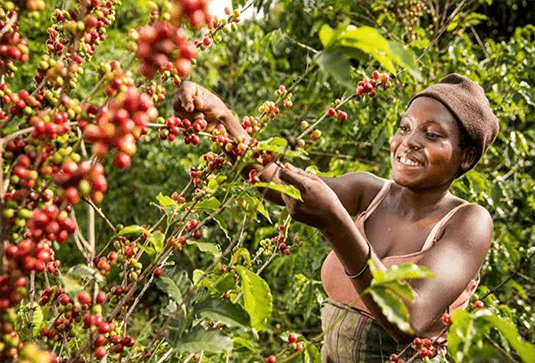
The Youth Transition to Coffee Green Skills and Entrepreneurship Opportunities (Y2GEO) is a transformative 2 Years project (Jan 2025-Dec 2026) implemented by Albertine Interventions for Development (AID), with funding from the Belgian State and Enabel as the Contracting Authority. The project is designed to unlock meaningful economic opportunities for 1,150 vulnerable youth at least 40 % and Women minimum70% in the Albertine and Rwenzori regions within Uganda’s vibrant coffee sector.
Expected Project Output/Results:
Result 1: 350 youth trained as Agronomy service providers, young plant risers, and demo youth champions demonstrating Best Agronomic Practices and Products (BAPs) on coffee plots/farmer field schools.
Result 2: 800 youth access decent work in coffee processing and value addition.
Result 3: 1150 Vulnerable youth and women mentored employability, life skills, standards, and rights at work.
Result 4: Financial inclusion through 20 Village Saving and Loan Associations (VSLAs) strengthened, linking 1,150 youth, women and coffee farmers to microfinance institutions for affordable credit.
Vulnerability categories of targeted beneficiaries:
- Youth and women with formal limited education or skills training
- Youth and women at risk of or involved in hazardous or illegal activities
- Un employed and under paid youth and women
- Adolcents, out of school drop outs, and unskilled coffee farmers
- Youth exposed to domestic or gender-based Violence.
- Women from Low-income households, single mothers and subsistence farmers needing skill enhancement
Age criteria
- Youth aged 18-35 years
- No age limit for vulnerable women beneficiaries.
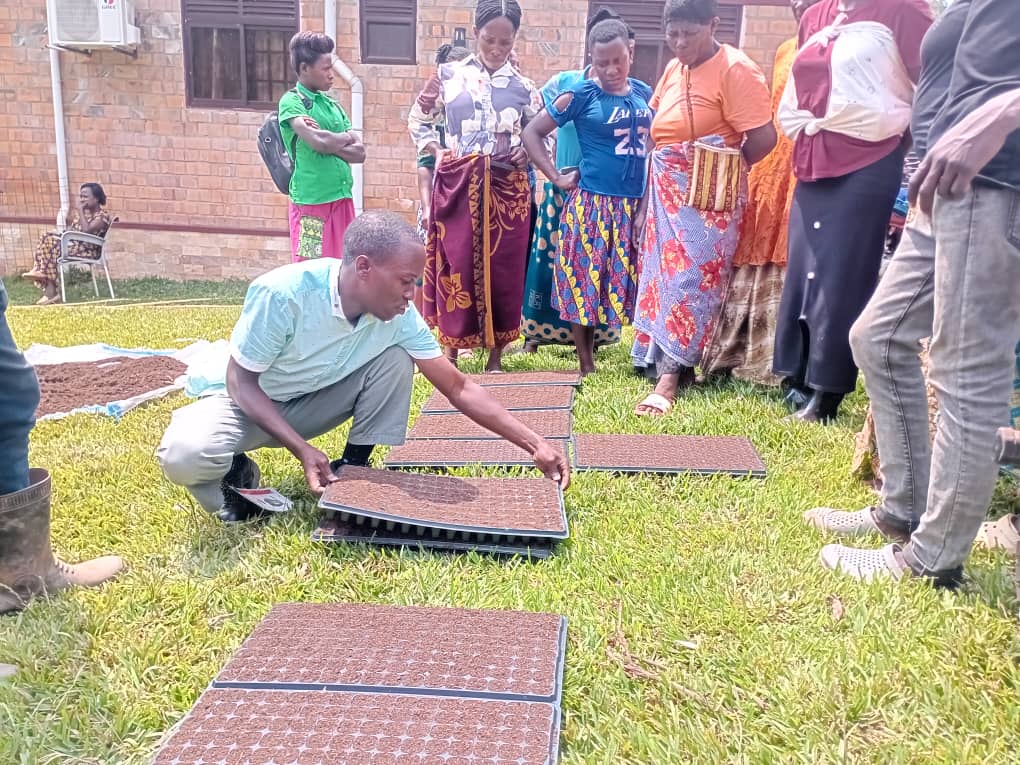
We are implementing the Y2GEO project in Kabarole, Kasese, Kibaale, and Hoima districts.
We are equipping youths and women with the skills, knowledge, and tools they need to thrive across the entire coffee value chain.
In partnership with Enabel, we are offering strategic investment in Uganda’s future by promoting decent work, enhancing household incomes, and fostering inclusive economic growth.
Through a co-creation approach with partners, community leaders, youths and women, AID is ensuring local ownership, relevance, and long-term impact putting young people and women at the heart of a green, resilient coffee economy.
Kulya Kurungi Project

KK Project is a 3 Years Project (2025-2027) being implement by Albertine Interventions for Development (AID) with funding from the NGO ILES DE PAIX (IDP) aiming ensuring that families and other stakeholders, especially women and youth, benefit from improved living conditions through the co-construction of sustainable food systems and healthy environment.
KK Project Specific Objective
Is to create decent and sustainable green jobs, especially for the youth, by strengthening the local and sustainable production and consumption of key vegetables in the food systems in and around fort portal town in the Rwenzori Region.
The KK Project is designed is designed basing on the following principles:
- Supporting farmers to produce vegetables with less or no chemicals targeting producers in Kabarole District, majorly in the sub counties of Karangura, Kicwamba and Harugongo Sub counties. The support is also being provided for intensification of urban agriculture initiatives in the Fort Portal City that have been piloted under the ongoing Mpanga Super Farmers Project Plus.
- Ensuring the availability of these alternative/organic products (ensuring that they can be easily differentiated) in fort portal food system and its commonly used food outlets (Fresh and Cooked).
- Raising consumer awareness to the reality of vegetables present on the market and create a sufficient knowledge base to stimulate the market in favor of healthier alternatives
- Focus on youth and women to engage them in the objectives of the programme and ensure that they play an active role through job creation, support for entrepreneurship opportunities.
- Stimulate actions that enable the availability of inputs for organic farming and initiatives that provide added value within Rwenzori region itself.
- Raising awareness among the farmers about the use of chemicals and ensure they can make informed choices. Whenever chemicals are used, farmers must have the knowledge to use them safely, have access to personal protective Equipment (PPES), and know and apply appropriate safety measures.
Our Address Changed from Plot 19, Nyaika Avenue, Speke Lane TO
Plot 1, Rukurato Access, Rukurato Road, (Off) Nyaika Avenue, Boma Fort Portal City.
P.O Box, 405, Fort Portal-Uganda
Building Resilience and Inclusive Growth for Highland Farming Systems for Rural
Transformation (BRIGHT) Project
Bright is a four year (2022-2026) project implemented by Albertine Interventions for Development (AID) in partnership with International Fertilizer Development Center (IFDC) as a lead partner and funded by the Netherlands Ministry of Foreign Affairs through the Embassy of the Kingdom of the Netherlands, seeking to build the resilience capacity of farm households and farming systems to increase income and food and nutrition security of all farmers and transform households from subsistence oriented farm households to more market-oriented farmers, targeting over 106,560 Ugandan highland farmer households in Kigezi, Mt. Elgon, and Rwenzori regions
The project intends to improve equitable decision-making, enhance food and nutrition security, improve access to inclusive financing, decrease the yield gap to increase farmers’ incomes, and facilitate sustainable land use and better access to input and output markets using the Participatory integrated farm planning (PIP) and watershed approaches.
Five core components form the basis of the project: farm household and farming systems, sustainable land use and crop production, market access and value chain development, food and nutrition, and gender, youth, social, and financial inclusion.
BRIGHT Project Goal:
Resilient and inclusive economic development of rural highland farming communities which are able to absorb, mitigate and or adapt against economic and climatic shocks and stresses.
BRIGHT Project outcomes: Improved food and nutrition security amongst the participating farmer households. Farmers have increased incomes from the sale of increased volumes of quality produce Farmland converted to sustainable use
Project Funders & Partners:
IFDC & Embassy of the Kingdom of Netherlands (EKN)
Climate-Resilient Seed Varieties in Uganda (CSV-Uganda) Innovation Project

Albertine Interventions for Development (AID) is implementing a Climate-Resilient Seed Varieties in Uganda (CSV-Uganda) Innovation Project which is being piloted in the Rwamanja Refugee settlement camp and host communities in Kamwenge District and its mainly to improve access to climate resilient and certified seed varieties that are open pollinated, early maturing, disease and pest resistant for enhanced crop production and productivity, seed security, food and nutrition security.
The project is building the capacity of selected intrapreneur refugees and host community farmers to become certified Quality Declared Seed (QDS) producers and multipliers so that the rest of the farming households within the targeted communities can easily access the same QDS for the purposes of production of nutritive and market preferred crop varieties at subsidized prices with a focus of selfreliance, co-existence and improved livelihoods among the refugees and host communities. Some of the prioritised value chain crop commodities include Beans, Sweet Potatoes and groundnuts.
CSV-Uganda Innovation project is being implemented under 2 two pathways which of which they include:
• Technically equipped and professionally organized.
• Strategically linked and market oriented
Project Beneficiaries:
CSV-Uganda Innovation pilot Project intends to benefit 1000 beneficiaries from Rwamwanja refugees’ settlement and its host communities located in Kamwenge District.
Project Funder/Partners: Save the Children, Uganda Response Innovation Lab (U-RIL), National Agricultural Research Organization (NARO), Ministry of Agriculture, Animal Industry and Fisheries (MAIIF), Uganda National Bureau of Standard (UNBS).
Restoring Resilience of highland farmer communities and watersheds in
Uganda (CommonGround Project)

CommonGround Project is a four 4-year Project (2023-2026) being implemented by Albertine Interventions for Development (AID) in partnership with Integrated Seed Sector Development Uganda(ISSD-Uganda) and in collaboration with Wageningen University Environment Research (WENR) in the Netherlands with funding from the Dutch Ministry of foreign affairs through Embassy of the Kingdom of the Netherlands (EKN) in Kampala. The Project aims at restoring the resilience of 100,000 farming households in the watersheds of the highlands of Rwenzori & Kigezi which are under growing degradation threats.
Goal: The project goal is “to build the resilient farmer communities and agro ecosystems in the highlands of Uganda, based on sustainable farming systems, restored watersheds, and improved marketing opportunities”. CommonGround Project is facilitating integrated household and community actions towards enhancing resilience, restoring degraded hotspots in the watersheds and as well improving agro-marketing
Project Funder/Partners: Integrated Seed & Sector Development Uganda (ISSD-Uganda), Wageningen University Environmental Research (WENR), Dutch Ministry of Foreign Affairs through the Embassy of the Kingdom of Netherlands (EKN) in Uganda.
Project Name: Food and Nutrition Access (FANTA-Project)


Goal: The project is aimed at reducing micronutrient malnutrition and improving dietary intakes of vitamin A, and iron among the female beneficiary households heads in the refugee settlement and Internally Displaced Persons (IDPs), through enhanced production of Vegetables, Vitamin A rich sweet potatoes and Iron rich beans, increasing consumption and utilization of bio fortified foods and building and strengthening partnerships for mainstreaming bio fortification.
Objectives
- To create public awareness and enhance knowledge about OFSP, iron rich beans and Vegetable production and consumption including their importance.
- To mitigate the incidences of iron and Vitamin A deficiencies among the vulnerable target communities.
Major role in the Project: Provision of technical agricultural advisory services to the beneficiary women/girls on the areas of Seed Potato production using Local Seed Business (LSB) methodology and approaches such as farmer Field School (FFS), Voluntary Savings & Loan Associations (VSLA), training them on Farming as a Business (FAAB), and production of Orange Fleshed Sweet Potatoes (OFSP), vegetable growing and post-harvest handling to ensure better harvest and proper management of the output.
Target population: 12,000 households for 3 districts
Project Location: Kamwenge, Kasese & Ntoroko
Project Funder/Partners: Associated Country Women of the World (ACWW), NARO, MAAIF and AID.
Project Name: Sustainable Land Management (SLM-Project)


SLM Project will encompass established approaches such as Soil and Water Conservation, Natural Resource Management and Integrated Landscape Management (ILM). The project will also involve a holistic approach to achieving productive and healthy ecosystems by integrating social, economic, physical and biological needs and values, and it contributes to sustainable and rural development.
During the Project implementation, Albertine Interventions for Development (AID) will integrate a range of other SLM-related interventions and approaches, such as farmer field schools; Integrated Farm Planning (PIP), conservation agriculture; catchment- and farm-scale approaches to integrated land and water management and land husbandry; local land-use planning; integrated plant and pest management; and sustainable forest management.
This project seeks to respond to chronic food insecurity in the Rwenzori, Elgon and West Nile regions caused by environmental degradation and climate change, among other things. Most people in the regions experience year-round or seasonal food shortages in the face of increasing droughts.
The project seeks to achieve its objective through three outcomes:
- Development and strengthening of Multistakeholder Innovation Platforms (MSIPs) that will enable better planning, including landscape-based planning.
- Channeling investments into resilient and adapted food production systems and value chains using a farmer field school approach, Integrated Farm Planning (PIP) approach adapted to the realities of the agro-ecological communities in 3 regions and their need for enhanced food and nutritional security
- Supporting the development of monitoring and assessment methodologies and the participatory monitoring of project indicators, global environmental benefits, and socioeconomic benefits.
Project Location: Rwenzori, West Nile & Elgon regions
Project Funder/Partners: International Fund for Agricultural Development (IFAD) and AID.

Project Name: Enhancing the Competitiveness of Small and Medium Enterprises in Uganda (ECOS-Project)
The Project aims at increasing the competitiveness of 1000 Ugandan SMEs, create 3000 jobs, and improve the employment situation of 22,000 people. Project Location: Rwenzori & West Nile regions Project Funder/Partners: Deutische Gesellschaft fur Internationale Zusammenarbeit (GIZ), GOPA World Wide, AID.
Project Name: Local Seed Business Outscalling (LSB-Project)
Our Major role in the project: Supported farmer groups and cooperatives in the sustainable production and marketing of Quality Declared Seeds (QDS) for the open pollinated varieties of Soybeans, Beans, Groundnuts, Field peas, potatoes and finger millet
Project Location: Districts of Bundibugyo, Ntoroko, Kabarole, Bunyangabu, Kasese, Kapchorwa, Bulambuli, Kween and Sironko.
Project Funder/Partners: Embassy of the Kingdom of Netherlands (EKN) through Wageningen University Research (WUR), ISSD-Uganda, NARO, MAAIF and AID

Project Name: Agriculture Cluster Development Project (ACDP)
Our Major role in the project: Supporting farmers to demand and access critical inputs for intensification of production with a resultant increase in marketable volumes. Under the same project, farmers are being supported to commercialize agriculture by offering them with access to tractor hire services for farming operations.
Project Location: 42 Districts of Uganda Mainly in Central, Bunyoro, Western, Northern, Eastern and West Nile regions.
Project Funder/Partners: World Bank through Ministry of Agriculture, Animal Industry and Fisheries (MAAIF) and AID

Project Name: Seed Business Enterprise Project
Our Major role in the project: Supporting farmers to access Quality Declared Seed (QDS) varieties for soybeans, field peas, Beans, potatoes and Groundnuts at subsidized and affordable prices and training the farmers on Good Agronomical Practices (GAPs), Post-Harvest Handling, Storage and collective marketing
Project Location: Ankole, Kigezi, Rwenzori, Eastern and West Nile regions of Uganda
Project Funder/Partners: NARO, MAAIF, RECO Industries, AID

Project Name: Farm Input and Mechanization Access (FIM-Access Project)
Our Major role in the project: Supporting farmers’ access to quality inputs and Tractor Hire services for farm operations at subsidized prices to maximize production output
Project Location: Ankole, Kigezi, Rwenzori, Eastern and West Nile regions of Uganda
Project Funder/Partners: NARO, MAAIF, NAADS, AID

Project Name: Micronutrient Support Project (MSP)
Our Major role in the project: Supporting Pregnant Mothers and Children under five 5 years in the hard to reach Districts to access Multivitamins, Vitamin A Supplements and dewormers for improved health.
Project Location: Districts of Ntoroko, Bundibugyo, Kabarole, Kamwenge, Kyegegwaand Kitagwenda.
Project Funder/Partners: Vitamin Angels International, DLGs, AID.

Project Name: HIV, TB and Malarial Prevention & Control Project
Our Major role in the project: Supporting communities in Accelerating Demand for HIV, TB and Malaria Services through Social Mobilization (ADSOM)
Project Location: Ntoroko District.
Project Funder/Partners: Global Fund, TASO, ICWEA and AID.

Project Name: Biogas Technology Up scaling Project
Our Major role in the project: Mobilization and supporting of communities in Rwenzori & Elgon regions in the construction and better use of Biogas Digester Plants. The project is helping to protect the environment mainly the air, water, and soils by recycling organic waste into renewable energy and soil products, while reducing GHG emissions.
Project Location: Districts of Kabarole, Ntoroko, Kamwenge, Kasese, Kyegegwa, Kapchorwa, Bulambuli, Kazo and Kiruhura.
Project Funder/Partners: HIVOS/ SNV (The Netherlands Development Organization), Biogas Solutions Uganda and AID

Project Name: Skilling Youths in Clean Energy Technologies
Our Major role in the project: Mobilization and training of unemployed youths in the construction of Biogas Plants and Institutional Saving Stoves, manufacturing of Clean Cook Stoves and Charcoal Briquettes to create employment opportunities for the youth whilst conserving the environment. AID also supported youths by providing Business Development Services (BDS) through organizing them into a conservation association as well as supporting them to register up to the District level with the department of Community Based Services (CBS).
Project Location: Ntoroko District.
Project Funder/Partners: Islamic Development Bank, Ministry of Local Government (MOLG) and AID